Reimagining Peace: From Peacebuilding to the Common Good
The following is a reflection by Bryan Carey, building on a conversation with Bishop Zac Niringiye during a Christian Peacebuilding Network monthly meeting. Bishop Zac is a Ugandan theologian and retired Anglican bishop whose decades of ministry, theological leadership, and public advocacy have made him a respected global voice on faith, justice, and the church’s public witness. His work challenges the church to embody the gospel through justice, humility, and solidarity rather than power and control.
“Isn’t it time we are awakened by the failure of this paradigm?” - Bishop Zac Niringiye
Bishop Zac Niringiye opened our Christian Peacebuilding Network gathering with a question that set the tone for everything that followed. It was not a critique of peacebuilding from outside the movement, but from someone who has spent decades pursuing justice, democracy, and reconciliation in Uganda. His challenge was directed toward all of us who care deeply about peace: What if some of the assumptions, language, and systems we have inherited are no longer capable of producing the kind of peace Scripture envisions?
As the conversation unfolded, it became clear that Zac was inviting us to reconsider not simply our methods, but our theology.
Again and again, he returned to the biblical witness, particularly the prophets. Jeremiah’s warning echoed throughout our conversation: leaders proclaiming, “Peace, peace,” while refusing to confront the injustice that make peace impossible.
“Maybe the peace paradigm is a pretense—the language that soothes.”
The issue, Zac argued, is not that peace is the wrong goal. It is that peace can become a slogan that protects the status quo rather than advances God’s kingdom. That peace becomes detached from justice. That stability is mistaken for shalom. That while overt conflict may be reduced, oppression remains untouched.
That raises uncomfortable questions for Christian peacebuilders: “Are we part of the problem?” “Is the peacebuilding paradigm serving those who fund it?” “Is it serving empire and patterns of power and domination?”
These questions are not accusations so much as invitations to examine ourselves honestly. Have our institutions become more concerned with managing conflict than confronting the conditions that produce it? Have we learned to speak about reconciliation while avoiding conversations about power?
For Zac, Scripture refuses to separate these things.
Returning to the covenant at Sinai, he reminded us that God’s purpose was never simply to rescue Israel from Egypt. God was forming “a kingdom of priests and a holy nation”—a people whose common life would reflect God’s justice in the world. The Torah, therefore, is not merely personal morality. It is a vision for how power is exercised, how communities are ordered, and how the vulnerable are protected.
The prophets continually measured Israel against that covenant.
Their concern was not simply idolatry or individual sin. It was whether widows, orphans, foreigners, and the poor could flourish. Whether rulers used power to protect or exploit. Whether economic life reflected God’s generosity or human greed. The cries of those who had been crushed became the evidence against the nation.
As Zac reminded us, God’s attention is repeatedly drawn toward “the cry of the dispossessed and crushed.”
This is why Jeremiah’s condemnation is so severe. The false prophets were not lying because they used the word peace. They were lying because they proclaimed peace without justice.
“What is needed now is not ‘peace, peace, peace’ but justice.”
Perhaps, Zac wondered, we have become so committed to the language of peacebuilding that we have lost the sharper biblical language of justice, righteousness, and covenant faithfulness.
“Can we say, ‘We are justice builders’? … Shouldn’t we be shifting from ‘peacebuilding’ to the search for the common good?”
Whether or not we adopt different language, the underlying challenge remains. The biblical vision of shalom has never been the absence of conflict. It is the presence of right relationships—with God, with one another, and with creation. It is a society where justice orders communal life, where power serves rather than dominates, and where those most vulnerable are able to flourish.
That vision also changes whose voices matter.
“The message must come from those who suffer oppression…This is not ‘inclusion’—it’s that the poor, weak, and dispossessed shape the agenda.”
Jesus consistently located himself among those pushed to the margins. The prophets spoke from the perspective of those who suffered injustice, not those who benefited from existing arrangements. If the Church is to follow Jesus faithfully, then perhaps we should expect the clearest theological insight to emerge not from the centers of power but from those who bear its consequences.
As Zac put it, “The problem is not the marginalized places but the centers of power.”
That observation reshapes where we direct our attention. We often treat communities experiencing conflict or poverty as though they themselves are the problem. Scripture repeatedly turns our gaze elsewhere—toward kings, priests, merchants, rulers, and systems that organize society around domination rather than covenant love.
This led Zac to name one of those systems directly.
“It is not ‘make poverty history.’ No! It is ‘make greed history.’”
The language is intentionally provocative to shift our attention away from symptoms toward causes. Poverty is not merely an unfortunate condition. It is the fruit of greed, extraction, exclusion, and the misuse of power.
Here Zac offered one of his strongest critiques of the peacebuilding community.
“Oftentimes, ‘peacebuilders’ are unable and unwilling to speak about justice and the organizing of power.”
For Christians, this may be especially important. We are often comfortable talking about forgiveness, reconciliation, and healing. We are less comfortable asking who benefits from the existing order, whose interests are being protected, and what repentance requires of those who hold power.
Yet the biblical story continually presses in that direction.
Zac also invited us to recover what he called the “ancient paths.” He reflected on indigenous languages, indigenous economies, and traditions like ubuntu that preserve ways of imagining society beyond domination and endless accumulation.
We share so we both have enough.”
Even the language of “the common good,” he cautioned, can be absorbed into systems that remain fundamentally unchanged. Every generation must learn to redeem its language rather than assume familiar words still carry their biblical meaning.
That is part of our calling today: To recover words like justice, righteousness, shalom, covenant, mercy, repentance, and kingdom—not as slogans, but as realities shaped by the life, death, and resurrection of Jesus.
For Zac, “This is the message of the cross.”
The cross is God’s refusal to make peace by accommodating domination. It exposes the violence of empire, stands in solidarity with those who suffer beneath it, and opens the way toward a reconciled humanity marked by justice, mercy, and resurrection hope. Christian peacebuilding begins here, not with preserving order, but with participating in God’s costly work of making all things new.
Questions We Continue to Carry
Rather than resolving all our questions and tension, Zac’s challenge continues to provoke us.
Have we mistaken stability for biblical peace, becoming content to reduce conflict while leaving injustice untouched?
In what ways have Christians and even Christian peacebuilders become the very voices Jeremiah warned about—declaring “peace, peace,” while avoiding the systems that deny people justice?
How often do our funding models, institutional incentives, or theological assumptions reward the preservation of order more than the pursuit of God’s justice?
Whose voices are shaping our understanding of peace? Are they the voices of those who benefit from the existing order, or those whose cries Scripture tells us God hears?
What would change if those who suffer injustice were not merely included in our work, but became the primary theologians, teachers, and architects of it?
Where is Jesus standing today—and are we willing to leave the centers of power to join him there?
If the cross reveals both God’s judgment against domination and God’s invitation into a new humanity, what must die in our own ministries, institutions, and imaginations for that resurrection life to become visible?
These are not comfortable questions. They are not meant to be. But perhaps that is precisely the gift of conversations like this one with Zac. They call us back to the prophets, back to the margins, back to the cross, and back to the biblical vision of shalom—a peace that is never separated from justice because it is nothing less than the life of God’s kingdom breaking into the world.
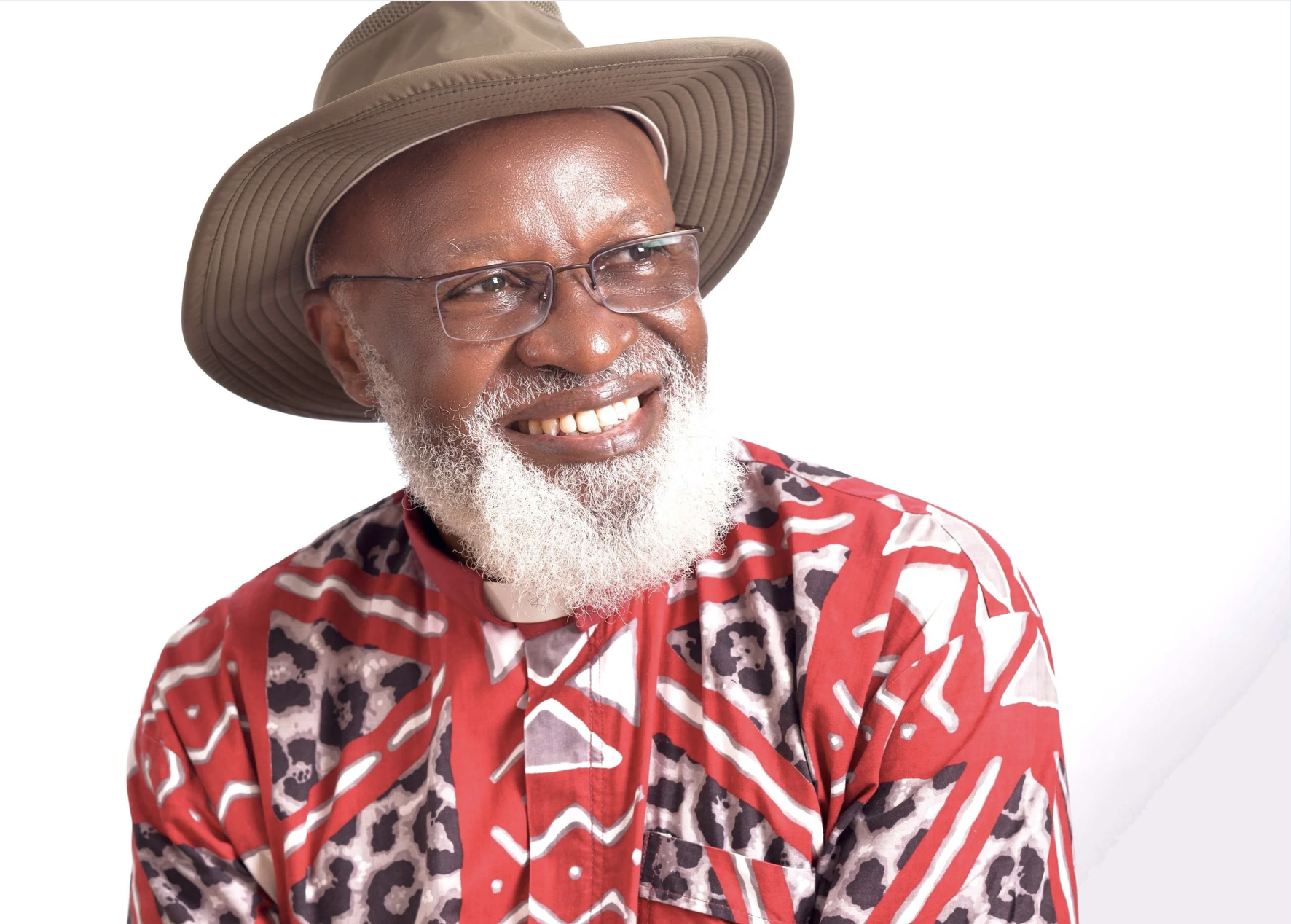
Zac Niringiye is a retired bishop (Church of Uganda, a member of the Anglican Communion) and long-time justice scholar-activist—whose life and work have consistently challenged dominant assumptions about faith, power, and what it means to pursue peace.