Continuity
From the beginning, my mom was an important part of my faith journey. People who knew her even a little knew that she was steadfastly involved in missions and evangelism, part of mission committees for most of her life. She had once very seriously considered becoming a Wycliffe Bible translator. She was also a steadfast pacifist, protesting against the Vietnam war in college, and cared deeply about racial justice, having become friends with an African-American girl on a church trip to Alabama in her teens. When they went places together it wasn't safe for them to walk together on the same side of the street. These things that were important to my mother fit together because she understood that the Gospel was not just about going to heaven when we die, but the coming of God's kingdom of justice, peace, and dignity for all people and that it could not be forced on people or spread with violence. Those who knew her also knew that my mom did not (like any of us) live this out perfectly.
I didn't just naturally inherit all this, though. Like Dorothy and the ruby slippers, I had to discover it for myself. When I went to college, I was skeptical of pacifism and justice movements. Like most kids growing up in an Evangelical home in America in the 80s, my default positions were spiritually, politically, and socially conservative. What 18-year-old doesn't think their mom is a bit of a weirdo? And then I met an Australian girl in my dorm who was also in my Calculus class. Our freshman year, God introduced himself to her and showed her how He was the fulfillment of the peace and wholeness she'd been looking for. She found in the life, death, resurrection, and teachings of Jesus a hope for justice, peace and dignity for all people. We became good friends, and she challenged me to re-read the Gospels and see if I didn't see what she had found there. I was proud of my spiritual upbringing: I had been a Christian my whole life, and I had gone to a private Christian school, so I had to accept the challenge. And when I reread the Passion stories in the Gospels, I wept that I had not seen it before. Jesus’ love and forgiveness was so lavishly on display - healing, wholeness, and peace offered to us all. My mom was still a weirdo, but not quite the same way I had thought she was.
During college, I also got involved with Intervarsity (like my mom and dad and uncles before me) which began to poke at my privilege as a white, middle-class, young man. I started listening to this wild Christian ska band, Five Iron Frenzy. Their lyrics were challenging, like my Australian girlfriend's theology and Intervarsity's celebration of racial and ethnic inclusion and empowerment. All this was starting to gradually sink in, imperfectly, and I started to understand the Gospel as more than just going to heaven - that other people needed this Gospel not just to go to heaven, but for peace and justice and dignity.
The Australian girl and I got married after college. We heard God calling us to love the "least of these" and to "love our enemies." And who were they after 9/11 and the beginning of the war in Afghanistan, but Afghans. I remember being on the train on my way to work listening to Five Iron on my Gen 2 iPod, feeling desperate to go because staying wasn't OK anymore. So we went to Afghanistan in 2008 with good intentions, a little training, and two small children. About two weeks after arriving, an American woman was killed in the street not far away and we prayed, "God, it's taken so much to get here, please don't send us home." He didn't send us home right away. We stayed long enough to see some of our bright ideas fail. We stayed long enough for Afghan friends to become like family. And long enough to lose dear friends in 2010 and again in 2014. And then we did come home when the darkness and violence were just too close.
Along the way I discovered something I had not expected - nonviolent peace and justice movements that had come up from inside a Muslim context - the Khudai Khidmatgar movement in British India and the Hizmet movement in Turkey. God seemed to want peace and wholeness and dignity for Muslims even when Christians ignored or even opposed it.
Ten years ago, Coralie and I were exploring what was next for us as his followers and for our family. Although there was the possibility to continue our work in Afghanistan, or work overseas addressing the refugee crisis that was engulfing the world, we recognized that within our own Evangelical Christian space there was an increasing silence or opposition to peace, justice, and dignity for all people - for black women and men, for immigrants at the southern border, for refugees arriving from around the world. So with God's guidance (and maybe some of our own preconceived notions), we moved to Louisville, Kentucky to work with Crescent Project, mobilizing the church to replace fear with love - especially toward our Muslim neighbors. During my nearly ten years with the Crescent Project, God has helped many churches begin to reach out in love towards Muslims, in so doing also expanding their view of how they serve their communities. For this I am enormously grateful. Joining this work and helping Christians move from fear toward relationship and hospitality felt like an essential next step in our journey.
God had very much gone before us on our journey to Louisville, as on our first Sunday at church there, Martin Brooks was preaching about the Shalom that God has for us and wants us to share. Martin would later introduce me to his work at Peace Catalyst and give us an broad overview of how churches and non-profits in Louisville were connecting with immigrants. Martin also connected me to a Turkish mosque, part of the Hizmet community that I had been reading about. Coralie jumped into an internship with Kentucky Refugee Ministries, and her boss was none other than the granddaughter of the founder of the Khudai Khidmatgar.
Over time, however, I began to have that feeling like I did on the train in the spring of 2008 and 2016, that it was time for a shift. Although I still believed in Crescent Project’s mission, I was also bumping up against ways in which it was too limited. While Crescent Project was challenging churches to move beyond fear, we fell short of challenging them to work in mutuality, shared flourishing, and collaboration with Muslim communities in pursuing God's justice and peace for all people. I was feeling an urgency to refocus on partnering with an organization that aligns its ways of working with its goals of peace and justice, and prioritizes a more complete, holistic understanding of the Gospel.
That urgency has brought me to begin work with Peace Catalyst as IT Manager. It was easy to see that working with Peace Catalyst fit the trajectory of what God has been doing in my life for a long time. At Peace Catalyst, our mission is working to equip and mobilize Christians for collaborative peacebuilding across lines of difference in order to see diverse communities cultivating relationships with our neighbors and working together to create safe, just, and vibrant societies. In other words, working towards peace, justice, and dignity, expressed in the Gospel of the Kingdom of God.
What does Peace Catalyst's work look like? We envision our work as two interweaving threads: equipping and mobilizing the church, and partnering with whoever is ready in peacemaking initiatives. Both of these threads are shaping ongoing work in many places in the world, but especially in places of former and current conflict like North Ireland, Bosnia, Palestine/Israel, and on the Korean Peninsula. Peace Catalyst's mobilization efforts help bring awareness to Christians of: God's mission to bring Shalom to the world; understanding of conflict, broken systems, and practices; and ways that we can be engaged in healthy transformation of lives and communities. By partnering and networking, Peace Catalyst is ready to launch Christian peacemakers into collaborative work, catalyzing a broader peacebuilding movement.
It is such an incredible honor to be part of this work that God is doing!
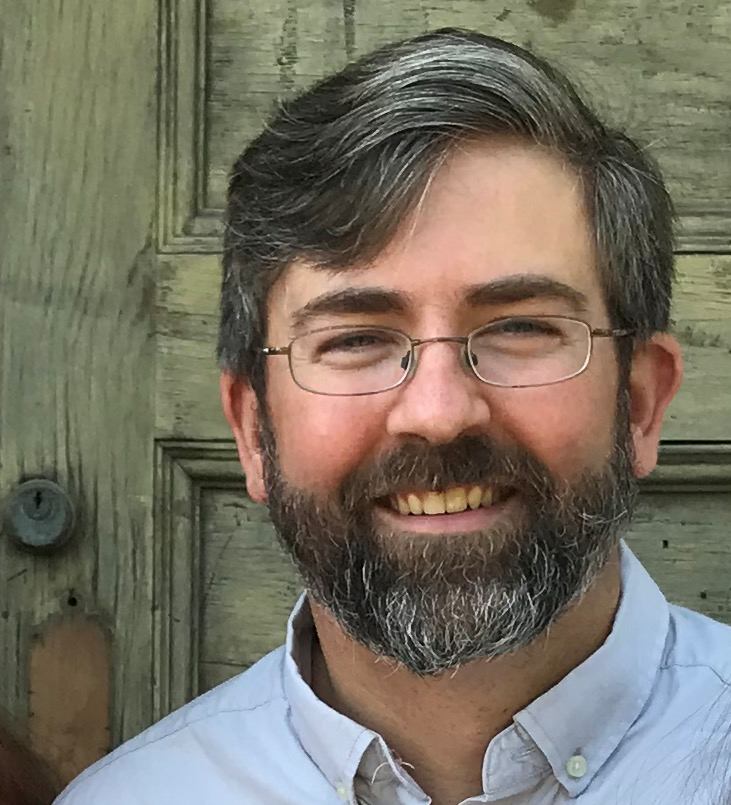
Matt is Peace Catalyst Information Technology Specialist. He is a technology professional experienced in working with international, cross-cultural teams in both for-profit and non-profit contexts. Matt and his wife served with an international NGO supporting health, development, and peacebuilding projects in Central Asia, and after returning to the U.S. they moved to Louisville, Kentucky, where they currently reside.