Therapy is Peacebuilding
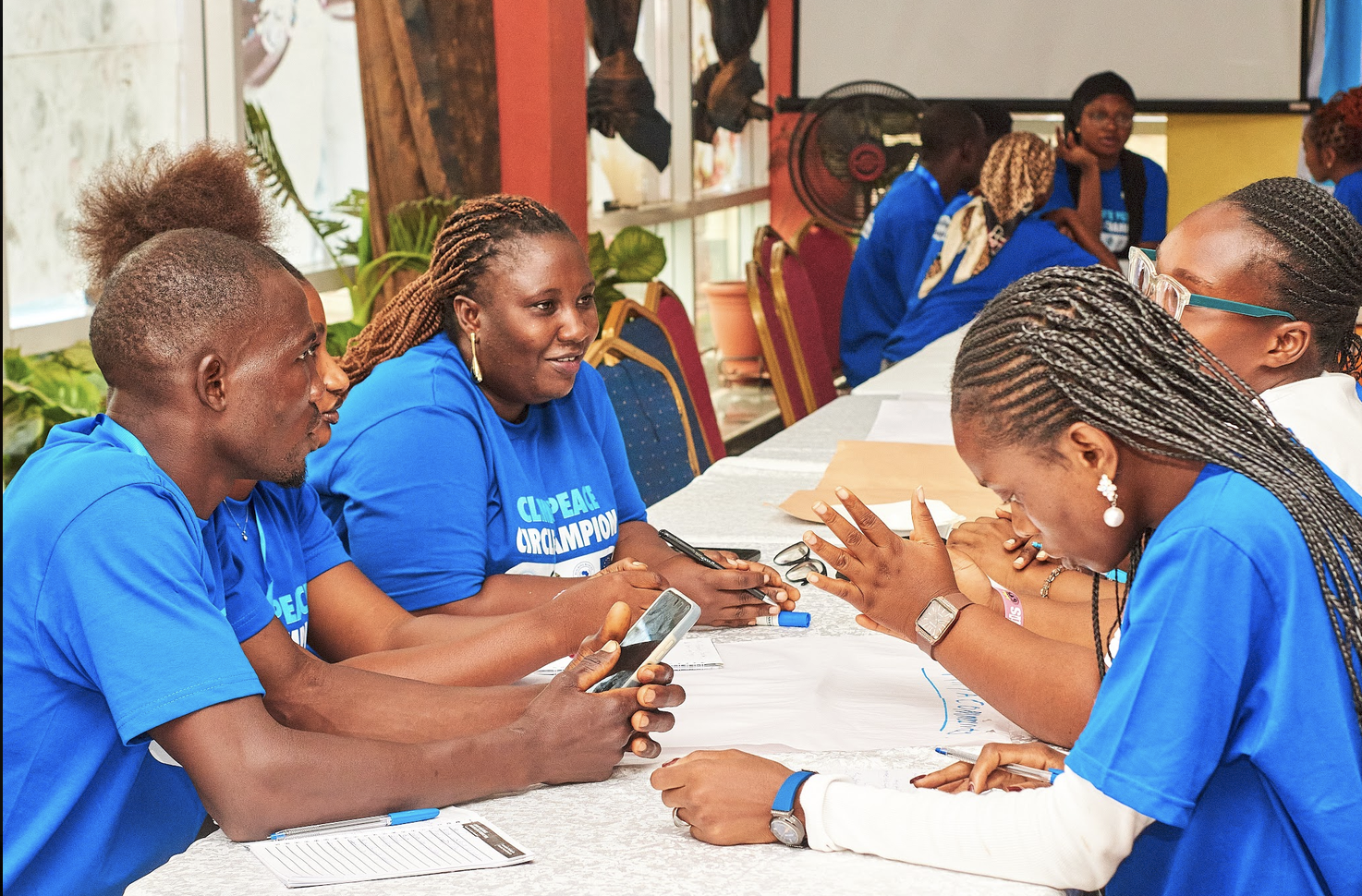
Over the past three months, I had the opportunity to be part of a local project called “Safe and Strong – Women Shaping Communities,” through which I led Kintsugi workshops in different towns across Bosnia and Herzegovina. Kintsugi, the Japanese art of repairing broken pottery with gold, symbolizes the idea that our scars do not have to be hidden, but can instead become part of our strength and beauty. In many ways, that philosophy reflected the women I met throughout this journey.
These local communities bring together women who are trying to find ways to improve their everyday lives, as well as the lives of the people around them. Yet what moved me most were not the workshops themselves, but the stories these women shared, the way they spoke about one another, and the resilience they carried despite everything they had lived through.
One of the most encouraging experiences for me was visiting Bratunac and Srebrenica. These places carry an incredibly heavy historical burden. Srebrenica remains the site of the genocide committed against Bosniaks during the 1990s war, while Bratunac today has a predominantly Serbian population. In the media, we often hear that ethnic groups in Bosnia and Herzegovina barely communicate with one another, and in many places that is still true. That is precisely why it felt so powerful to witness Bosniak and Serb women sitting together, supporting one another, and working toward improving their communities.
One woman said something that stayed with me long after the workshop ended: “I do not look at someone’s name or surname [which immediately identifies them as a Bosniak, Croat, or Serb]. I look at the person.” She also shared that life had taught her that even when a person breaks apart, they can still rebuild themselves and find meaning again. In that moment, I realized how deeply connected that idea was to Kintsugi itself — accepting the cracks without allowing them to define us only through pain.
At the same time, my visit to Stolac revealed how alive wartime divisions still are in some parts of Bosnia and Herzegovina. Stolac is a breathtakingly beautiful town. Its landscape reminds me of Tuscany, with stone architecture, greenery, and rivers that create an atmosphere of peace and timelessness. But beneath that beauty lies a deep division between Croat Catholics and Bosniak Muslims.
The women’s community we met there was mostly Bosniak, and the stories they shared made it clear that, for many of them, the war never truly ended. One woman spoke about her husband, who still lives with severe PTSD and wakes up in the middle of the night, jumping from bed as if he is still fighting for survival. Others shared stories about concentration camps their husbands endured, as well as their own experiences of captivity and trauma.
Walking through Stolac, I felt as though time had somehow stopped there. That feeling became even stronger when I needed to find an ATM and one of the women offered to walk with me. She did not describe the town in a tourist-like way, pointing out landmarks or historical attractions. Instead, she explained it through division: “This side is ours, and that side is theirs.”
People there do communicate, but mostly on a surface level. There are invisible boundaries that are rarely crossed. One of the most striking images I witnessed was a café divided by a fence decorated with artificial flowers. On one side was a Bosniak-owned café, and on the other, a Croat-owned one. People from one side simply do not enter the other café. What made this even heavier was learning that the owner of the Croat café had been accused of war crimes, yet was never held accountable for them. In a place where justice feels unfinished, coexistence becomes even more fragile and complicated.
What saddened me most was hearing that children attend the same school, under the same roof, but use separate entrances and barely interact with one another. Communities structured this way leave very little space for younger generations to build genuine reconciliation. I understand why older generations have chosen to live this way — the wounds they carry are profound and deeply personal. But it also raises an important question: what kind of future is left for those growing up within these divisions?
This is exactly why the women I met in Bratunac and Srebrenica gave me so much hope. They have not erased the past, nor forgotten what happened. But despite everything, they chose to sit together, support one another, and work toward something better.
In a country still shaped by ethnic and political divisions, that may seem like a small thing. To me, however, it felt enormous.
Perhaps change in Bosnia and Herzegovina will not begin through political speeches or formal agreements, but through small groups of women who choose to sit at the same table, share their stories, and see each other first and foremost as human beings. In that, I still see hope.

Mirela is Peace Catalyst Program Director in Bosnia and Herzegovina (BiH). Born in Sarajevo in the 1980’s, she had a front row seat to the breakup of Yugoslavia and the siege of Sarajevo and is a licensed trauma therapist working to address the unengaged trauma in BiH. Learn more about Mirela here.