This is now the fourth war I have lived through in Lebanon.
Each time violence returns, it carries old memories with it. Old fears. Old grief. In moments like these, I often find myself asking again: How do we hold onto peace in the midst of darkness? How do we continue believing that God is good and that Jesus truly is the Prince of Peace when societies keep tearing themselves apart?
I was born during the Lebanese civil war, a devastating conflict that fractured communities and left deep wounds across an entire society. Christians fought Christians. Muslims fought Muslims. Militias formed and turned against one another. Everyone suffered, and no one won. When the war finally ended, many people simply said, “Let’s move on,” but there was little justice, little healing, and very little honest reckoning with the pain. Many of the same people who fought the war later became the leaders ruling the country.
One of my earliest memories comes from that time. During bombing, families in Lebanon often hide in the bathroom because it is considered one of the safest rooms in the house. I still remember sitting there in the bathroom with my family while explosions shook the city around us. My mother began telling the story of the disciples in the storm, terrified they were about to die, while Jesus slept in the boat. In the middle of that story, I felt something deeply personal — as though Jesus himself was speaking into my fear: “Don’t worry. I am here.”
I was only six years old, but something about that moment stayed with me.
Nothing changed around us. The bombing continued. The danger was still real. But something happened inside me. Looking back now, I think something was planted in me that day — a seed that would shape the rest of my journey.
The Narratives We Inherit
I also grew up inside another kind of conflict: the conflict of identity and belonging. My father is Muslim and my mother is Christian, and because of that, our family was rejected by both sides. I grew up without grandparents, aunties, or the wider family network many people take for granted. At first, I did not fully understand why. But as I got older, I realized how deeply fear, religion, and social division shaped our relationships.
Then the war interrupted my education. I had to leave school when I was twelve years old. In Lebanon, education is deeply valued, so when that path disappears, it creates a deep crisis of identity. I remember wondering, What am I going to do with my life?
Around that time, I became connected to a Christian community called “Addicted to Jesus,” connected to YWAM, where charismatic Catholics and evangelicals were worshiping and serving together. At the time, I did not fully understand the significance of Catholics and evangelicals worshiping together. I only knew that I encountered people who genuinely cared for me — physically, emotionally, and spiritually. Looking back, I realize now how transformative that was. It took people caring for my whole wellbeing for me to begin healing from some of the pain I carried.
Eventually, through those relationships, I was invited to Northern Ireland. I thought I was escaping conflict and going somewhere better. Instead, people there welcomed me by saying that parts of Belfast were “another Beirut.” I suddenly found myself in a society carrying many of the same wounds: inherited narratives, divided communities, trauma passed between generations.
It was there that I encountered something inside myself that I could no longer ignore.
I grew up believing a group of people are the problem in Lebanon. Like many people shaped by conflict, I inherited narratives about who to fear, who to blame, and who could not be trusted. Then I arrived in Northern Ireland and discovered that my roommate was one of them.
At first, I could not accept him. I could not love him. That realization shook me deeply. During that season, I began understanding how much hatred and division we inherit from our communities and families. I began to see how easily people become categories instead of human beings. Even in Christian ministry, I realized that people can become projects rather than genuine relationships. We may say we love people, but often we love the mission, the idea, or the cause more than the actual people standing in front of us.
That year transformed me. I began learning about forgiveness, reconciliation, trauma, and the power of narrative. I started seeing how unresolved pain creates walls of hostility that continue shaping entire societies long after wars officially end.
“God’s Love for Everyone Is Absolute”
Later, during a trip from Northern Ireland to South Africa, I encountered yet another deeply divided society where different groups all claimed to believe in God while remaining trapped in systems of separation and hostility. By that point, I was carrying the pain of Lebanon, Northern Ireland, South Africa, and the stories of places like Rwanda and Burundi. I remember becoming deeply frustrated and angry with God.
I went away alone to pray, and I remember crying out: “God, where are you? Why are you allowing this to happen? There is something wrong with us as Christians and how we are living.”
What happened next is difficult to fully explain. I can only say that something became profoundly clear to me: God’s love for everyone is absolute. Not for one tribe, religion, nationality, or political side — for everyone. And at the same time, I realized how often we use the name of God while destroying the image of God in one another.
I sensed God saying: “I’m looking for peacemakers.”
That realization changed the direction of my life.
I joined YWAM in Northern Ireland because it was one of the few places where I knew people were seriously wrestling with peacebuilding and reconciliation. Over time, I began understanding how much our pasts shape us. We can call ourselves followers of Christ, but unresolved pain, fear, and trauma continue living inside us, creating hostility toward others. These wounds do not disappear automatically. They must be transformed through love, truth, healing, and community.
Eventually, I returned to Lebanon carrying a conviction that has stayed with me ever since: we receive forgiveness so that we can become reconcilers.
Ironically, the first people who welcomed this message were Muslim Palestinians.
The same people I had once been taught to fear became some of my closest friends and partners in peacebuilding. I began spending time in Palestinian refugee camps, building relationships, listening, learning, and discovering how God often works in what I can only describe as “unorthodox ways.”
A Football Field Can Become Holy Ground
While living in Northern Ireland, I visited peace centers and community spaces where young people could gather, belong, and imagine a different future together. Over time, I began dreaming about creating something similar in Lebanon.
That dream eventually became Play for Peace through Al Shabiba Risala (ASR).
People sometimes ask me why we chose football. The answer is actually very simple: young people are looking for belonging. Human beings are relational. We want to be part of something larger than ourselves. If healthy communities do not exist, people will still search for belonging somewhere else — through sectarian groups, violence, drugs, extremism, or political manipulation.
In our community, there were very few healthy spaces for young people. The football field became more than a football field. It became a place for friendship, dignity, creativity, healing, and hope.
Today, hundreds of young people from different nationalities, religions, and backgrounds train together through our programs. Christians, Muslims, Palestinians, Syrians, Lebanese — all learning to become a community together in a country constantly pressured toward division.
And that is not easy.
Sometimes opposing teams try to provoke sectarianism or aggression during matches. Sometimes political tensions outside the field threaten to divide relationships inside the academy. This current conflict in Lebanon has especially tested us because it feels frighteningly similar to the atmosphere of the 1970s before civil war fully erupted. Many people are retreating again into fear and political camps.
But one of the greatest joys of my life is seeing these young people resist that pull.
When other people expect division, they show friendship. When others expect hatred, they protect one another. Some people look at our teams and cannot understand how such diverse young people have become family. But this is exactly why I continue believing peace is possible.
The Small Successes Matter
I have learned that peacebuilding requires long-term vision. We often want dramatic change overnight, but transformation usually happens slowly, through relationships built over years. Sometimes the most important victories are the smallest ones.
When a troublemaker becomes a peacemaker, that matters.
When a young person begins seeing someone from another community as a friend instead of an enemy, that matters.
When a divided group learns how to resolve conflict without violence, that matters.
The young people who joined us in 2017 are now becoming coaches themselves. They are now helping shape the next generation. Over time, families and communities began trusting us with deeper struggles and problems because they saw that this was not simply another project. It became a real community.
And our work has grown beyond football itself. We have helped create space for Palestinian and Syrian youth to participate more fully in sports in Lebanon. We have trained coaches and influenced other clubs. We collaborate with organizations working on historical memory, political manipulation, and community resilience because peace must touch every level of society.
None of us can do this alone.
Jesus Does Not Need Defenders
People sometimes ask me how I stay spiritually healthy in the middle of all this. The truth is that I do not always feel hopeful. There are moments when I feel exhausted, discouraged, or overwhelmed by the darkness around us.
But I have learned not to trust my emotions alone.
I return again and again to Jesus.
I often need to step away from the noise, politics, and fear to pray and realign my heart. I ask myself difficult questions: Am I becoming bitter? Am I losing compassion? Am I still seeing people as human beings made in the image of God?
One thing has become deeply clear to me over the years: Jesus does not need people to defend him. Too often, we become defenders of Jesus instead of followers of Jesus. We become obsessed with protecting identity, ideology, or power while forgetting how to love.
But Jesus consistently moved toward the Samaritan, the outsider, and the enemy. He formed communities in the middle of conflict and occupation. He taught us to love in ways that break cycles of fear and hostility.
That is what I want my life to reflect.
If my role model is Christ, then I believe transformation begins with communities learning to live differently together. Even if we want to change politics or society, we cannot give up on community. We cannot give up on young people. They are often the ones carrying the courage, imagination, and energy to create change.
So even now — in the fourth war I have lived through — I still have hope.
Because every day I see young people choosing peace over hatred.
And every time I see that, I remember again: peace is possible.
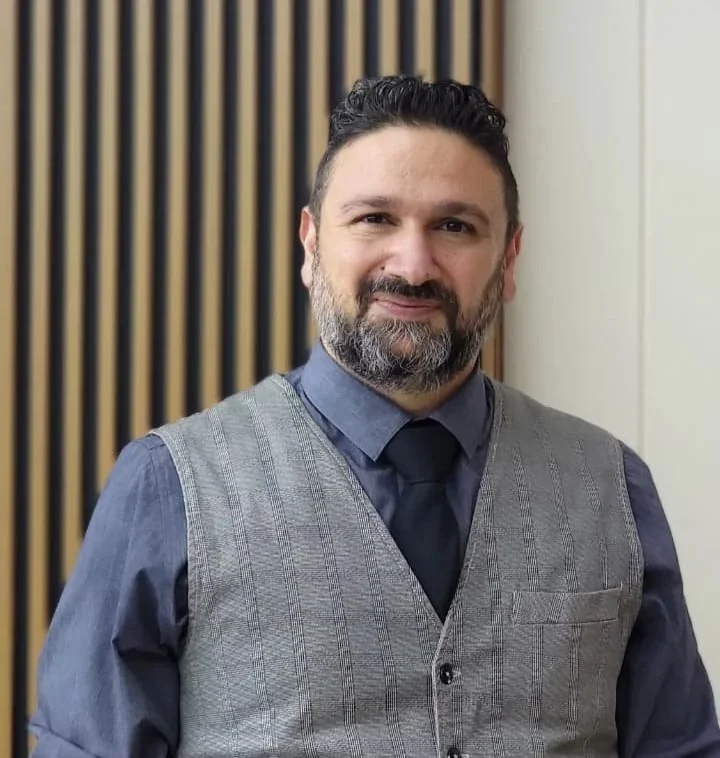
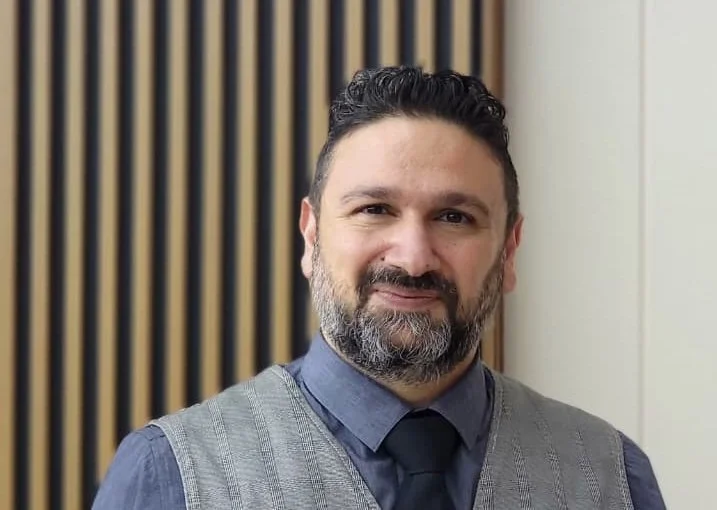
Ramy Taleb is a Peace Catalyst Peacebuilding Practitioner & Trainer, and Co-Founding Director of Al Shabiba Risala in Lebanon. Ramy is a Lebanese Christian leader, educator, and peacebuilder who has spent more than 20 years working at the intersection of faith, reconciliation, and community transformation. He also serves as Acting Dean of the College of Humanities and International Studies at the University of the Nations (YWAM) in the Middle East, where he mentors emerging leaders and teaches on biblical reconciliation, peacebuilding, and transformational leadership.. Learn more about Ramy here.