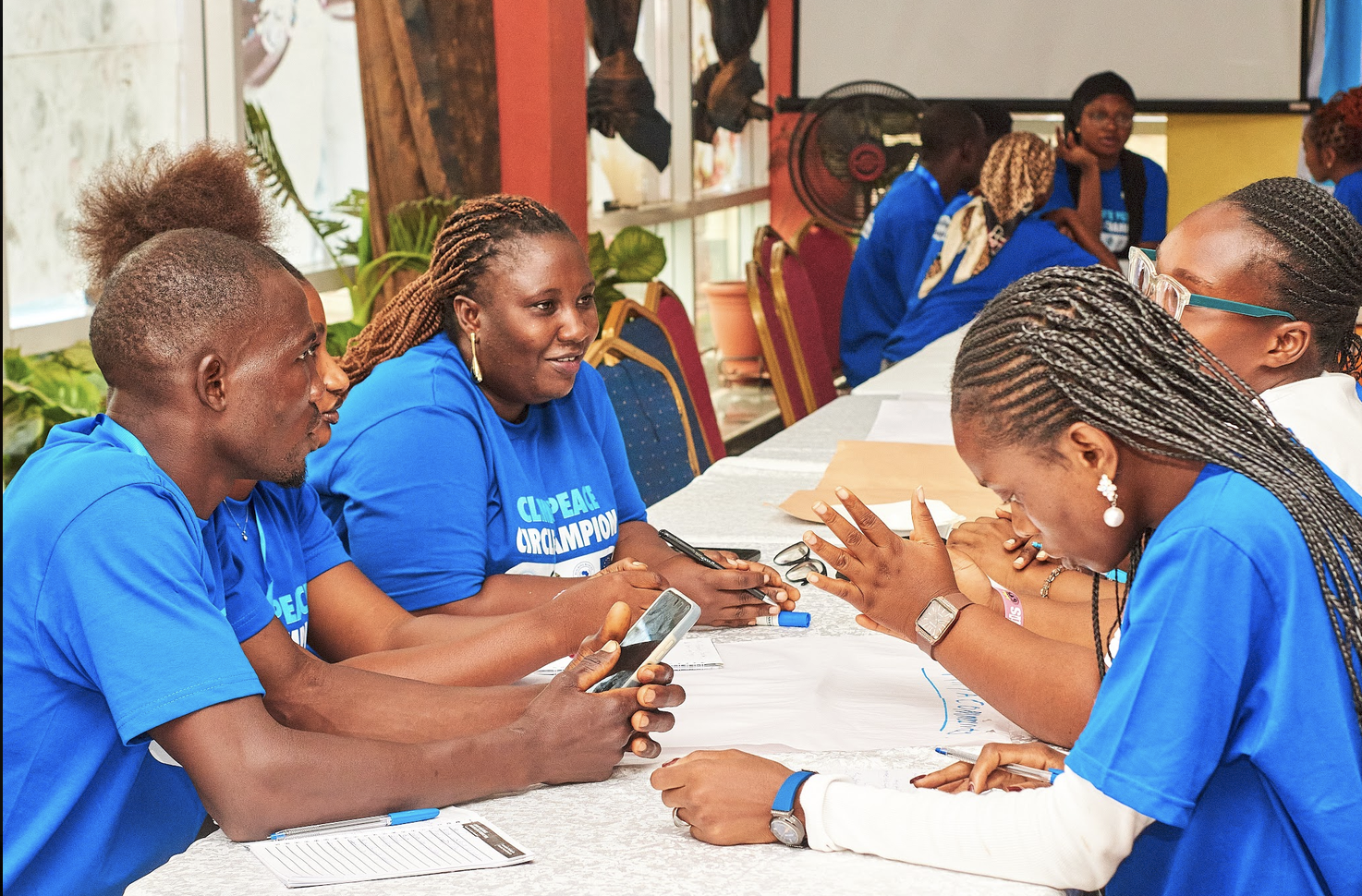
Find what you love and let it fuel you
Burnout.
It comes for the best of us, and it comes for the rest of us.
Whether we feel depleted by our jobs, or worn out by our roles as caretakers, or exhausted from trying to navigate the constant decisions required by this little thing called life, it seems inevitable that at some point, we simply shut down. We curl into balls, pull up the covers, close out the world—or at least put our guards up, distancing ourselves from the demands the world puts on us, pulling back mentally, emotionally, and/or physically.
For peacebuilders, for activists, for social changemakers, burnout is often accompanied by guilt and shame—I don’t have time to feel this way when others’ lives are at stake—and so we attempt to push through, putting all our energies into the fight until we hit the proverbial wall. Bruised, beaten, even broken, we end up scaling back our work, pausing while we find our footing once more, or altogether abandoning the actions we’re taking to advance causes we hold dear.
How to keep your activist flame burning brightly
But, as craftivist Shannon Downey points out in her book Let’s Move the Needle, this cycle of “rage-and-retreat” can do real harm to those who do not have the privilege of retreat. The ones being bombed or shot in the streets, the ones being rounded up and sent to detention centers or the ones forced to leave their homes because laws have stripped them of their safety, the ones dying from a lack of food, electricity, medical care, clean water . . . even when our rage burns away, they must continue the fight to live. Meanwhile, those of us who are marginalized—BIPOC, queer people, women, the unhoused, disabled and chronically ill individuals—it takes even more for us to be active in the fight for social justice; when someone pushes too hard and needs to retreat from active allyship, we either need to add to our already exhaustive workload, or surrender a particular struggle.
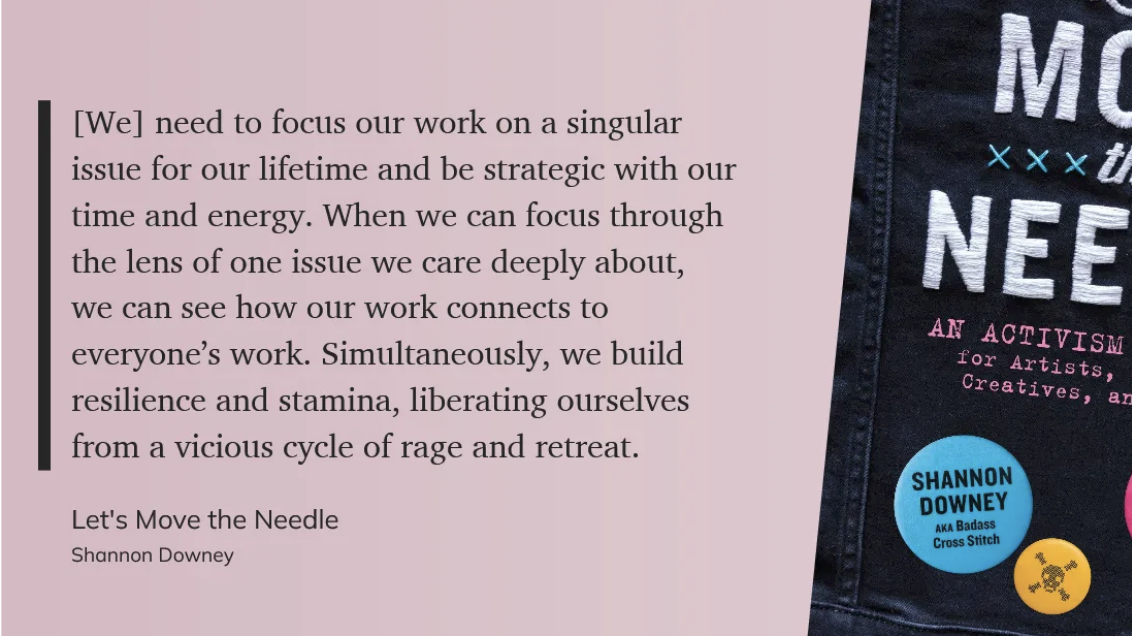
The solution, according to Downey, is to find a focus, to concentrate on the one issue we care about most deeply. Omkari Williams, author of Micro Activism, agrees, reminding readers that “small, sustained actions,” carried out regularly to further one cause, will be added to those of others doing similar work in such a way that we can create change without burning ourselves out.
“Micro actions can be squeezed into small amounts of time, don’t take much energy, and yet have a cumulative effect that is disproportionate to the individual effort they require.”
— Omkari Williams
Maybe you already know the change you’d most like to see in the world. If not, both Williams and Downey recommend making a list of all the causes you currently care about. To narrow it down, Williams recommends connecting your sphere of activism to your lived experience, which will help you stay motivated. Downey, meanwhile, suggests circling the three issues that feel most important to you; from there, consume a lot of media to educate yourself on the issue, listen to the people already doing the work, and start looking for points of connection and community where you can see yourself getting involved.
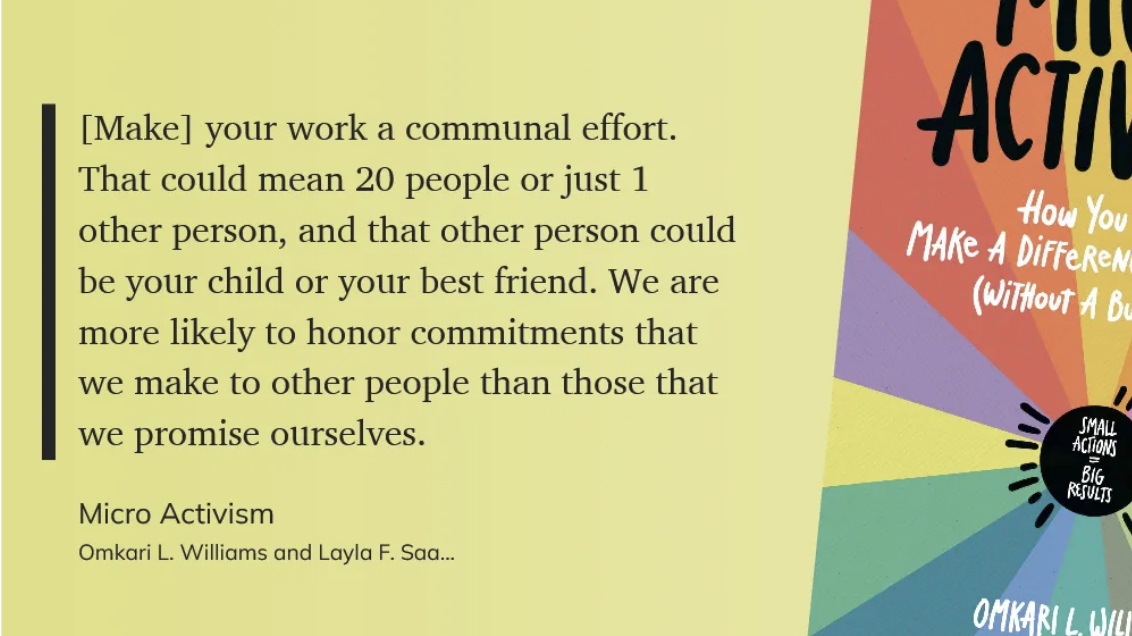
While both authors make it clear that in times of immediate crisis (say, when ICE is conducting raids in your city) it is ok to shift your focus to be of service, they remain firm about the fact that consistent, sustainable impact is best achieved by committing to one—at most two—issues. With that issue in mind, we can build out our activist work, determining what skills and talents we can put to use, how much time we can (realistically!) give, and which people and/or organizations we want to work alongside.
Join the Graceful Punks Book Club on Saturday, May 30!
The Graceful Punks Book Club was formed with the intention to introduce members to various aspects of peacebuilding—the ways in which we can nonviolently transform the relationships and cultural and social conditions that generate destructive and violent conflict.
At the same time, it is based on the ideas found in Patty Krawec’s Bad Indians Book Club; specifically, that reading groups can function as a means of grassroots education. When members read different books and gather together to discuss them, the group not only learns about a wide range of viewpoints, they begin to understand the ways in which different topics intersect.
This May, the Graceful Punks Book Club is reading books that fit with the theme, “Hope in a Time of Climate Crisis.”
But.
But.
We challenge you to find the issue in the world you’re most passionate about, the change you’re most ready to start making, and choose a book that connects your own personal sphere of activism to the restoration of the environment. Whether your advocacy feels broad (combating racism) or quite narrow (restoring public spaces to increase community engagement), I bet there’s a book that fits. For example…
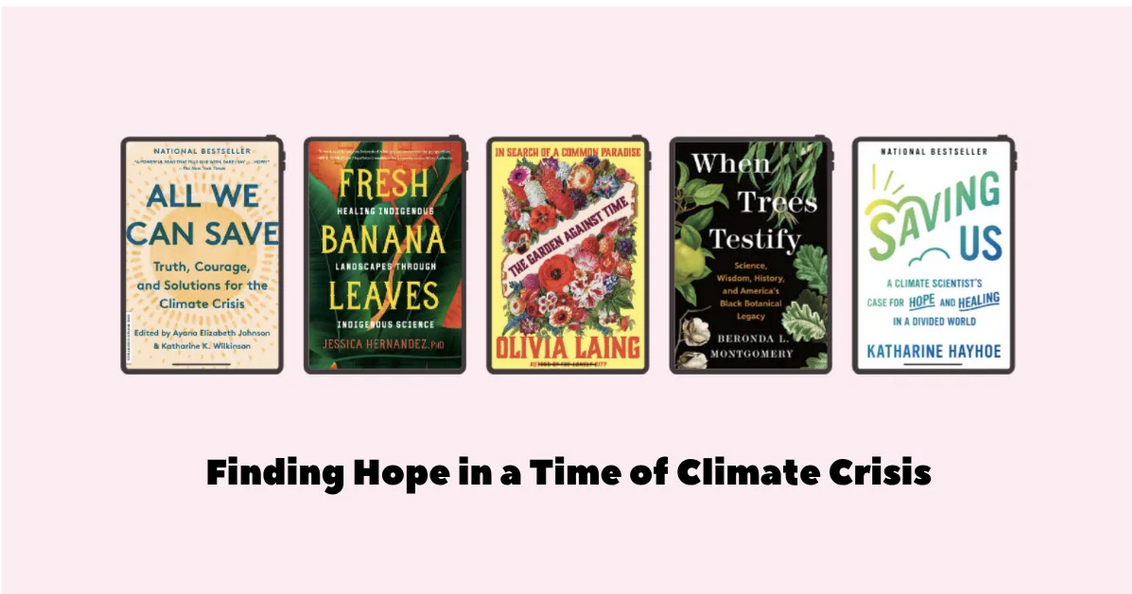
I want to work toward gender equality and uplift women’s contributions
All We Can Save: Truth, Courage, and Solutions for the Climate Crisis, edited by Katharine K. Wilkinson and Ayana Elizabeth Johnson
All We Can Save illuminates the expertise and insights of dozens of diverse women leading on climate in the United States—scientists, journalists, farmers, lawyers, teachers, activists, innovators, wonks, and designers, across generations, geographies, and race—and aims to advance a more representative, nuanced, and solution-oriented public conversation on the climate crisis.
I want to protect Indigenous rights, traditions, and knowledge
Fresh Banana Leaves: Healing Indigenous Landscapes through Indigenous Science by Jessica Hernandez, Ph.D.
An Indigenous environmental scientist breaks down why western conservationism isn’t working–and offers Indigenous models informed by case studies, personal stories, and family histories that center the voices of Latin American women and land protectors.
We Will Be Jaguars: A Memoir of My People by Nemonte Nenquimo
Nemonte is one of the most forceful voices in climate change activism. She has spearheaded the alliance of indigenous nations across the Upper Amazon and led her people to a landmark victory against Big Oil, protecting over a half million acres of primary rainforest. This is a memoir, an oral history, a hopeful tale of resistance.
I want to understand more about the Black American experience so I can combat white supremacy
When Trees Testify: Science, Wisdom, History, and America’s Black Botanical Legacy by Beronda L. Montgomery
In When Trees Testify, award-winning plant biologist Beronda L. Montgomery explores the way six trees--as well as the cotton shrub--are intertwined with Black history and culture. She reveals how knowledge surrounding these trees has shaped America since the very beginning. As Montgomery shows, trees are material witnesses to the lives of enslaved Africans and their descendants.
Reconsidering Reparations: Why Climate Justice and Constructive Politics Are Needed in the Wake of Slavery and Colonialism by Olúfẹ́mi O. Táíwò
A clear, new case for reparations as a "constructive," future-oriented project that responds to the weight of history's injustices with the equitable distribution of benefits and burdens. The book suggests policies, goals, and organizing strategies and leaves readers with clear and powerful advice: act like an ancestor. Do what we can to shape the world we want our moral descendants to inherit, and have faith that they will continue the long struggle for justice.
I want to advocate for more communal gathering spaces
The Garden Against Time: In Search of a Common Paradise by Olivia Laing
An exhilarating investigation of paradise and its long association with gardens, Laing interrogates the sometimes shocking cost of making paradise on earth. But the story of the garden doesn’t always enact larger patterns of privilege and exclusion. It’s also a place of rebel outposts and communal dreams. . . new modes of living can and have been attempted amidst the flower beds, experiments that could prove vital in the coming era of climate change.
I want to spur Christians into taking action on social justice issues
Saving Us: A Climate Scientist’s Case for Hope and Healing in a Divided World by Katharine Hayhoe
As a Canadian living in Texas, climate scientist Katharine Hayhoe has learned how to successfully navigate the political minefield of the climate change debate. She negotiates skepticism of the science, indifference to the harmful impacts, and resistance to the actions needed to avoid those risks. Rejecting scare tactics or guilt trips, Katharine engages with the cautious and the doubtful by finding shared values--and she says you can, too.
Many other examples can be found in the Graceful Punks Book Club Reading Challenge on StoryGraph!
Please join us for the blook club via this link on Google Meet on Monday, May 30 at 9pm CET/3pm ET
This blog was originally posted here.
Kirsten Schlewitz is Peace Catalyst Peacebuilding Educator, Digital Activist, Community Builder, and Creation Care Specialist in Belgrade, Serbia. She educates current and future pastors and church leaders on how peacebuilding can bridge their congregations’ spiritual practices, and she also engages in digital ministry to help Christians adopt peacebuilding as a way to live out their faith. Learn more about Kirsten here.